
Do your eyes hurt after looking at a computer, tablet, TV or smartphone screen for an extended period of time? If so, you are not alone. In the U.S., people spend an average of 444 minutes a day looking at electronic monitors. Based on this statistic alone, it’s easy to see why so many people suffer from eye strain caused by the daily use of digital technology. Here are a few tips to help prevent eye strain.
If you feel as though you are spending too much time looking at a screen, schedule specific times throughout the day to take 15-minute breaks. This will give your eyes a chance to relax after long periods of use.
In addition, try decreasing the brightness of your screen to limit the amount of light that is emitted. This will help protect your eyes from the harsh light.
For individuals who rely on a computer for work, consider investing in a pair of computer glasses. The tinted lenses in computer glasses help reduce glare from the monitor, which can contribute to eye strain.
Our lives are governed by our five senses — sight, sound, taste, smell and touch. We use our senses on a daily basis to execute the most basic tasks, but how much do we really know about how they function? For instance, do you understand how the sense of sight works? If not, keep reading for an introduction on how the eye works.
Your Eye: a Well-Oiled Machine
Each eye is a well-oiled machine involving several important components. Here are the basic parts of the eye:
1.Iris
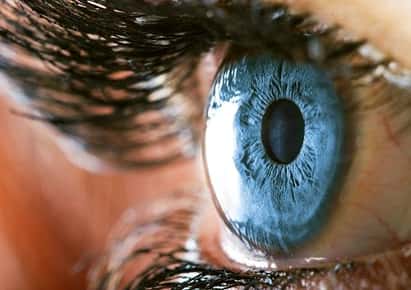
This is the colored section of the eye that surrounds your pupil. However, it’s more than just something pretty to look at. The iris is the muscle that allows your eye to adjust the size of the pupil, which regulates how much light enters your eye.
2.Pupil
The pupil is the black circle in the center of your eye. Again, it is responsible for regulating how much light enters your eye. As the amount of light increases, the size of your pupil will decrease to prevent the eye from being overwhelmed.
3.Lens
The lens is located behind the pupil and allows you to focus your vision. The lens grows thicker or thinner based on the amount of input received, but it loses elasticity with age.
4.Cornea
The cornea is the clear, outermost layer of the eye. One of its primary functions is to focus light that enters the eye. It also serves as a protective layer that can repair itself within a few days of suffering a minor injury.
5.Retina
The retina is located at the back of your eye and receives visual messages from the front of your eye. Once the retina receives a message, it transmits it to the brain through electrical signals. The brain then processes the signals as an image.
6.Vitreous Humor
The vitreous humor is a gel-like substance, filling the space between the lens and retina. It gives your eyeball its round shape. Often simply referred to as “the vitreous,” it thins with age, becoming increasingly liquid, and can sometimes cause vision problems as this happens.
The Importance of Protecting Your Eye Health
It’s important to maintain your eye health to ensure the best vision possible. You can integrate healthier options into your daily routine to promote sound eye health. What’s the cherry on top? These tips can also benefit your overall health.
- Maintain a balanced diet. By adding healthier foods into your diet, you can provide your eyes with the nutrients they need to function optimally. Try to incorporate foods high in vitamin C and E, phytochemicals, omega-3 fatty acids and zinc to help meet your daily recommended nutrition values.
- Limit your time on the computer or TV. If you are working on a computer for long periods of time, set up breaks to give your eyes some time away from the bright screen. You can also decrease your monitor’s brightness to minimize the strain on your eyes. Avoid watching TV or working on the computer in the dark and turn on another source of light to help prevent eye strain.
If you have any questions or concerns regarding your eye health, please contact your eye doctor to book an appointment.