Would you like to switch to the accessible version of this site?

Go to accessible site Close modal window

Don't need the accessible version of this site?

Hide the accessibility button Close modal window
Accessibility View Close toolbar

(816) 246-7779

Request Appointment
text
Menu
  • Home
  • Eyecare Services
    • Contact Lens Exams
    • Eye & Vision Exams
    • LASIK Eye Surgery
    • Eye Surgery
    • Hard To Fit Contacts
    • Computer Vision Treatment
    • Sunglasses
  • Features
  • New Patient Center
    • Online Forms
    • Insurance & Payments
  • Insurance/Open Access
  • COVID-19
  • Contact Us
    • Appointment Request
  • Meet The Doctors
  • About Your Eyes
    • What is a Certified Paraoptometric
    • What is a Doctor of Optometry
    • LASIK for Vision Correction
    • Vision Conditions
    • Eye Diseases
  • About Us
  • Frames
  • Lens Menu
  • Testimonials
  • Community Content
    • Common Eye Conditions
      • Age-Related
      • Cognitive and Acquired
      • Vision Impairment
      • Injury & Irritation
      • Eye Lids
      • Changes in Appearance
    • Contact Lenses
    • Eye Diseases
    • Eyeglasses
      • Eyeglass Lenses
    • Eye Symptoms
    • Tips and Tricks
    • How the Eyes Work
      • Basic Visual Skills
    • Pediatric Vision
    • Protecting Your Eyes
    • Visual Rehabilitation
    • Vision Problems
    • What is Vision Therapy
    • Vision Therapy Programs
    • We Can Help With
      • Cataracts
      • Corneal Disorders
        • Disorders
      • Glaucoma
      • Refractive Disorders
      • Adult Strabismus
      • Retinal Disorders
    • Newsletters
      • Glasses & Frames
      • Contacts
      • Kid's Vision
      • Conditions That Affect Vision
      • Tips for Healthy Eyes
      • Amazing, Interesting Eyes
      • Medical Perspectives
Envision Eyecare
  • Home >
  • Articles >
  • Common Eye Conditions >
  • Cognitive and Acquired >
  • Uveitis

Uveitis

  • Created in Common Eye Conditions, Cognitive and Acquired

Uveitis

Uveitis refers to the inflammation of the eye's middle layer, which consists of the iris, ciliary body, and choroid. Several fungal, viral, or bacterial infections lead to uveitis, as do certain autoimmune (systemic) and inflammatory conditions. In most cases of uveitis, however, the exact cause is unknown.

Types of Uveitis

Four classifications of uveitis exist. The exact parts of the eye affected by uveitis differ by classification.

  • Anterior uveitis (iritis) occurs closer to the front of the eye, and refers to inflammation of the iris or the iris and ciliary body.
  • Intermediate uveitis (cyclitis) refers to the inflammation of the ciliary body alone.
  • Posterior uveitis (choroiditis) refers to the inflammation of the choroid, located closer to the back of the eye.
  • Panuveitis (diffuse uveitis) refers to the inflammation of the entire middle layer of the eye.

Uveitis Symptoms

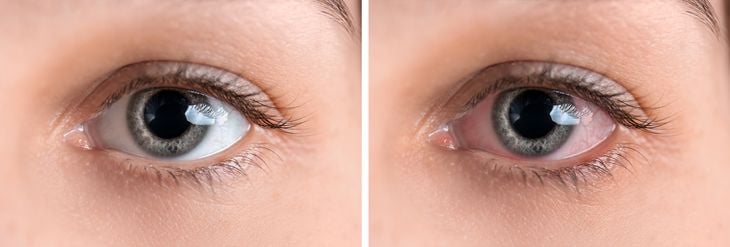
Uveitis symptoms vary depending on which type of uveitis the patient has. Anterior uveitis usually results in sensitivity to light, eye pain, redness, and a reduction in visual acuity. Interior and posterior uveitis cause floaters and blurred vision, but usually do not result in any pain. A combination of all these symptoms often accompanies panuveitis.

You should visit an eye care professional immediately if you experience any unusual symptoms around the eyes. If left untreated, uveitis can lead to cataracts, permanent vision loss, glaucoma, detached retina, and optical nerve damage.

Diagnosis and Treatment

In order to diagnose uveitis, an eye care professional will conduct a complete eye exam and a thorough consideration of your health history. Although the exact cause of uveitis is not always clear, a determinable cause is extremely helpful for treatment. If an eye care professional suspects an underlying cause for uveitis, he or she might refer you to a specialist for treatment.

In addition to receiving treatment for any condition causing uveitis, uveitis itself is usually treated with a steroid to reduce inflammation. Depending on the type of uveitis, a steroid is administered in eye drops, orally, or with injections. As anterior uveitis occurs closer to the surface of the eye, steroids in the form of eye drops are usually sufficient. Other forms of uveitis require oral steroids or injections. Sometimes, a small surgical drug implant is recommended for the administration of the anti-inflammatory steroid. An eye care professional might also prescribe eye drops to dilate the eye and reduce pressure.

  • Common Eye Conditions
    • Age-Related
    • Cognitive and Acquired
    • Vision Impairment
    • Injury & Irritation
    • Eye Lids
    • Changes in Appearance
  • Contact Lenses
  • Eye Diseases
  • Eyeglasses
    • Eyeglass Lenses
  • Eye Symptoms
  • Tips and Tricks
  • How the Eyes Work
    • Basic Visual Skills
  • Pediatric Vision
  • Protecting Your Eyes
  • Visual Rehabilitation
  • Vision Problems
  • What is Vision Therapy
  • Vision Therapy Programs
  • We Can Help With
    • Cataracts
    • Corneal Disorders
      • Disorders
    • Glaucoma
    • Refractive Disorders
    • Adult Strabismus
    • Retinal Disorders
  • Newsletters
    • Glasses & Frames
    • Contacts
    • Kid's Vision
    • Conditions That Affect Vision
    • Tips for Healthy Eyes
    • Amazing, Interesting Eyes
    • Medical Perspectives

Lees Summit Office

Monday:

8:30 am-5:30 pm

Tuesday:

9:00 am-5:00 pm

Wednesday:

8:30 am-5:30 pm

Thursday:

9:00 am-7:00 pm

Friday:

8:30 am-12:30 pm

Saturday:

8:30am-12:30pm Alternating Saturdays

Sunday:

Closed

Exclusive Offer

Receive Up to $100 OFF a Second Pair Of Complete Glasses!

Feel Free to Contact Us!

Error!

    • Copyright © 2026 MH Sub I, LLC dba iMatrix.
    • Admin Log In
    • Site Map