Would you like to switch to the accessible version of this site?

Go to accessible site Close modal window

Don't need the accessible version of this site?

Hide the accessibility button Close modal window
Accessibility View Close toolbar

(816) 246-7779

Request Appointment
text
Menu
  • Home
  • Eyecare Services
    • Contact Lens Exams
    • Eye & Vision Exams
    • LASIK Eye Surgery
    • Eye Surgery
    • Hard To Fit Contacts
    • Computer Vision Treatment
    • Sunglasses
  • Features
  • New Patient Center
    • Online Forms
    • Insurance & Payments
  • Insurance/Open Access
  • COVID-19
  • Contact Us
    • Appointment Request
  • Meet The Doctors
  • About Your Eyes
    • What is a Certified Paraoptometric
    • What is a Doctor of Optometry
    • LASIK for Vision Correction
    • Vision Conditions
    • Eye Diseases
  • About Us
  • Frames
  • Lens Menu
  • Testimonials
  • Community Content
    • Common Eye Conditions
      • Age-Related
      • Cognitive and Acquired
      • Vision Impairment
      • Injury & Irritation
      • Eye Lids
      • Changes in Appearance
    • Contact Lenses
    • Eye Diseases
    • Eyeglasses
      • Eyeglass Lenses
    • Eye Symptoms
    • Tips and Tricks
    • How the Eyes Work
      • Basic Visual Skills
    • Pediatric Vision
    • Protecting Your Eyes
    • Visual Rehabilitation
    • Vision Problems
    • What is Vision Therapy
    • Vision Therapy Programs
    • We Can Help With
      • Cataracts
      • Corneal Disorders
        • Disorders
      • Glaucoma
      • Refractive Disorders
      • Adult Strabismus
      • Retinal Disorders
    • Newsletters
      • Glasses & Frames
      • Contacts
      • Kid's Vision
      • Conditions That Affect Vision
      • Tips for Healthy Eyes
      • Amazing, Interesting Eyes
      • Medical Perspectives
Envision Eyecare
  • Home >
  • Articles >
  • Eye Symptoms >
  • Sleep in the Eyes (Eye Discharge)

Sleep in the Eyes (Eye Discharge)

  • Created in Eye Symptoms

Sleep in the eye

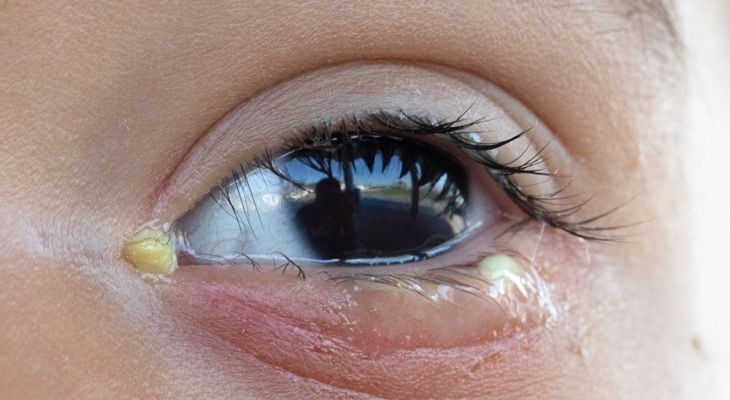
Sometimes referred to as "sleep" or eye matter, eye discharge that appears in normal consistency upon waking is a typical part of your body's defense mechanisms, protecting your eyes from bacteria or other irritants. Eye discharge that appears in abnormal consistency, color, or quantities might be a sign of a more serious condition and should be brought to the attention of an eye care profession right away.

Causes of Abnormal Eye Discharge

Abnormal eye discharge usually indicates an underlying condition -- sometimes bacterial, viral, or allergy related. One of the most common causes of abnormal eye discharge is conjunctivitis (pink eye), which refers to the inflammation of the conjunctiva (the lining of the underside of the eyelid and white of the eye). Conjunctivitis occurs due to contagious bacterial and viral infections as well as allergies. In addition, conditions such as ocular herpes, Acanthamoeba keratitis, blepharitis, and styes also lead to excessive or abnormal eye discharge.

Some issues which are not infectious can lead to abnormal eye discharge as well. These include chronic dry eyes, a blocked tear duct, sensitivity to contact lenses, an eye injury, and a corneal ulcer.

Abnormal Eye Discharge Symptoms

Symptoms of abnormal eye discharge include discharge which might be thicker, gooier, or more excessive than normal. Abnormal eye discharge might also be a different color than normal such as green, yellow, or even grey. In addition to these variances, one might notice the following symptoms:

  • dry eyes
  • watery eyes
  • itchy eyes
  • eye pain
  • double or blurred vision
  • red eyes
  • light sensitivity (photophobia)
  • swollen eyelids

If a bacterial or viral infection is present, symptoms such as body aches, chills, fever, sneezing, and/or coughing might accompany the above-mentioned eye symptoms.

A change in normal eye discharge alone or accompanied by any of these symptoms should be brought to an eye care professional’s attention, as it is usually the sign of a more serious underlying problem.

Diagnosis and Treatment

Eye care professionals diagnose the cause of abnormal eye discharge by looking at the patient's medical history and performing an eye exam. If a corneal ulcer is present, the eye care professional will likely test a sample to determine whether or not an infection is present.

Treatment for abnormal eye discharge depends on the diagnosis of the underlying cause, and might include oral antibiotics, antibiotic eye drops, antihistamines, or antihistamine eye drops. To alleviate symptoms at home, eye care professionals often recommend using a warm, wet compress.

  • Common Eye Conditions
    • Age-Related
    • Cognitive and Acquired
    • Vision Impairment
    • Injury & Irritation
    • Eye Lids
    • Changes in Appearance
  • Contact Lenses
  • Eye Diseases
  • Eyeglasses
    • Eyeglass Lenses
  • Eye Symptoms
  • Tips and Tricks
  • How the Eyes Work
    • Basic Visual Skills
  • Pediatric Vision
  • Protecting Your Eyes
  • Visual Rehabilitation
  • Vision Problems
  • What is Vision Therapy
  • Vision Therapy Programs
  • We Can Help With
    • Cataracts
    • Corneal Disorders
      • Disorders
    • Glaucoma
    • Refractive Disorders
    • Adult Strabismus
    • Retinal Disorders
  • Newsletters
    • Glasses & Frames
    • Contacts
    • Kid's Vision
    • Conditions That Affect Vision
    • Tips for Healthy Eyes
    • Amazing, Interesting Eyes
    • Medical Perspectives

Lees Summit Office

Monday:

8:30 am-5:30 pm

Tuesday:

9:00 am-5:00 pm

Wednesday:

8:30 am-5:30 pm

Thursday:

9:00 am-7:00 pm

Friday:

8:30 am-12:30 pm

Saturday:

8:30am-12:30pm Alternating Saturdays

Sunday:

Closed

Exclusive Offer

Receive Up to $100 OFF a Second Pair Of Complete Glasses!

Feel Free to Contact Us!

Error!

    • Copyright © 2026 MH Sub I, LLC dba iMatrix.
    • Admin Log In
    • Site Map